



PDE9
PDE9A is a high-affinity, cGMP-specific phosphodiesterase that hydrolyzes cGMP and shows much higher affinity for cGMP than cAMP[1]. Mechanistically, PDE9A controls natriuretic-peptide-linked cGMP signaling rather than nitric-oxide-stimulated cGMP in cardiac myocytes and muscle[2]. Therefore, PDE9A differs from PDE5A, because PDE5A regulates nitric-oxide-generated cGMP, while PDE9A can regulate cGMP signaling independent of nitric oxide synthase activity[2]. In disease models, PDE9A is expressed in mammalian heart, including humans, and is upregulated by hypertrophy and cardiac failure[2]. Selective PDE9A inhibition protected against pathological responses to neurohormones and sustained pressure-overload stress, and reversed pre-established heart disease independent of nitric oxide synthase activity[2]. In brain, PDE9A regulates a compartmentalized cGMP pool independent of neuronal nitric oxide synthase and nitric oxide signaling[3]. For experimental applications, PF-04447943 is a selective brain-penetrant PDE9A inhibitor that improved rodent cognition assays but did not improve cognition in a 12-week Alzheimer’s disease trial[4][5]. In sickle cell disease research, PF-04447943 was tested in a phase Ib randomized placebo-controlled study, and IMR-687 reduced vessel occlusion in the Townes-HbSS mouse model[6][7].
References:
- [1]. Fisher DA, et al. Isolation and characterization of PDE9A, a novel human cGMP-specific phosphodiesterase. J Biol Chem. 1998 Jun 19;273(25):15559-64. [Content Brief]
- [2]. Lee DI, et al. Phosphodiesterase 9A controls nitric-oxide-independent cGMP and hypertrophic heart disease. Nature. 2015 Mar 26;519(7544):472-6. [Content Brief]
- [3]. Harms JF, et al. Phosphodiesterase 9A in Brain Regulates cGMP Signaling Independent of Nitric-Oxide. Front Neurosci. 2019 Aug 23;13:837. [Content Brief]
- [4]. Verhoest PR, et al. Design and discovery of 6-[(3S,4S)-4-methyl-1-(pyrimidin-2-ylmethyl)pyrrolidin-3-yl]-1-(tetrahydro-2H-pyran-4-yl)-1,5-dihydro-4H-pyrazolo[3,4-d]pyrimidin-4-one (PF-04447943), a selective brain penetrant PDE9A inhibitor for the treatment of cognitive disorders. J Med Chem. 2012 Nov 8;55(21):9045-54. [Content Brief]
- [5]. Schwam EM, et al. A multicenter, double-blind, placebo-controlled trial of the PDE9A inhibitor, PF-04447943, in Alzheimer's disease. Curr Alzheimer Res. 2014;11(5):413-21. [Content Brief]
- [6]. Charnigo RJ, et al. PF-04447943, a Phosphodiesterase 9A Inhibitor, in Stable Sickle Cell Disease Patients: A Phase Ib Randomized, Placebo-Controlled Study. Clin Transl Sci. 2019 Mar;12(2):180-188. [Content Brief]
- [7]. McArthur JG, et al. A novel, highly potent and selective phosphodiesterase-9 inhibitor for the treatment of sickle cell disease. Haematologica. 2020 Mar;105(3):623-631. [Content Brief]
All Product Categories
-
PDE9 Related Products (19)
Related Products (19)

- 1
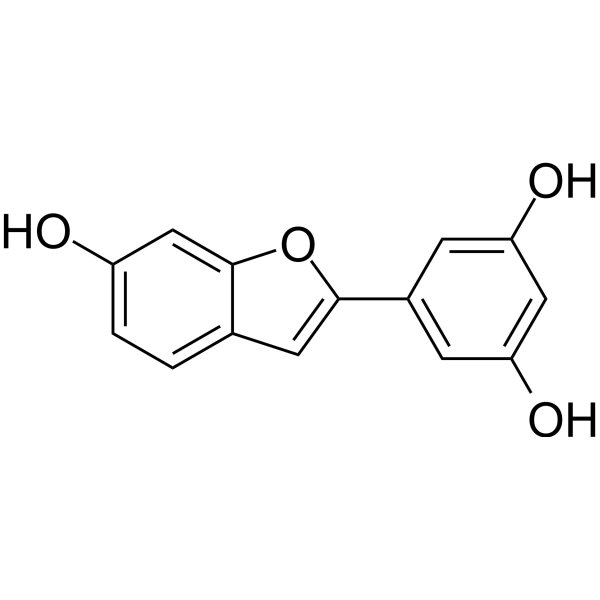
-
Edelinontrine
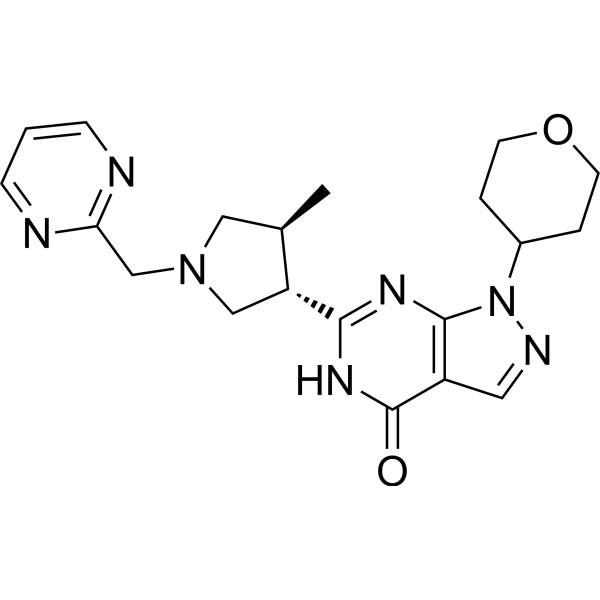 0 ImagesSynonyms: PF-04447943Edelinontrine (PF-04447943) is a potent inhibitor of human recombinant PDE9A (IC50=12 nM) with >78-fold selectivity, respectively, over other PDE family members (IC50>1000 nM).
-
BAY 73-6691
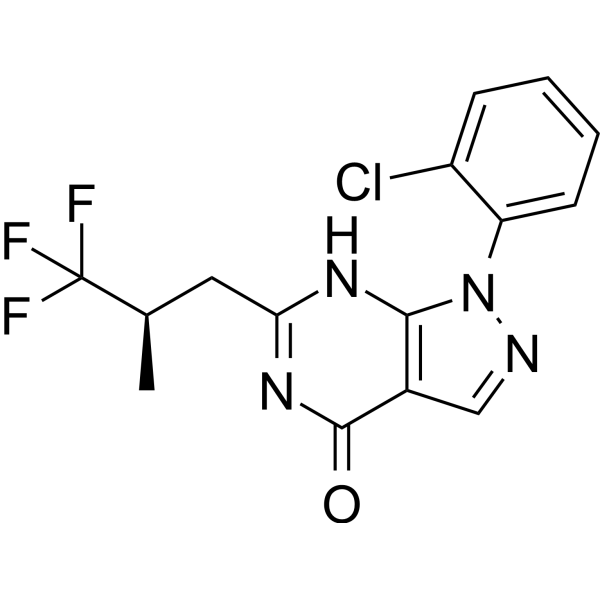 0 ImagesBAY 73-6691 ((R)-BAY 73-6691) is a potent, brain penetrant, and selective PDE9A inhibitor.
-
PF-04449613
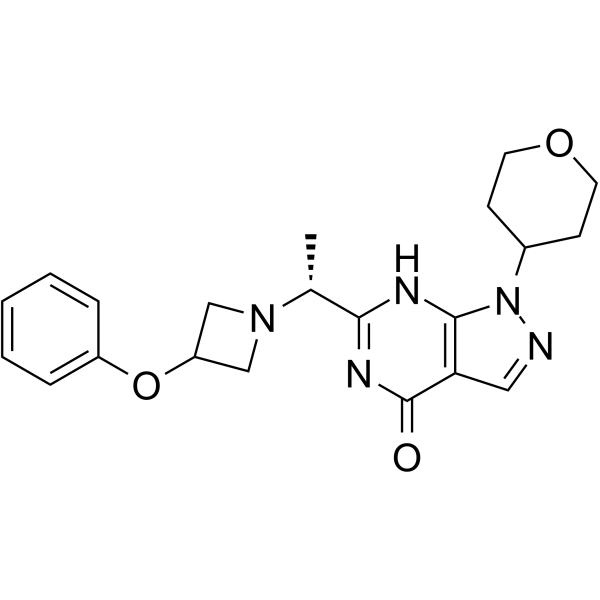 0 ImagesPF-04449613 is a selective PDE9A inhibitor with an IC50 of 22 nM[1]. PF-04449613 improved motor learning ability in a mouse model[2].
-
Osoresnontrine
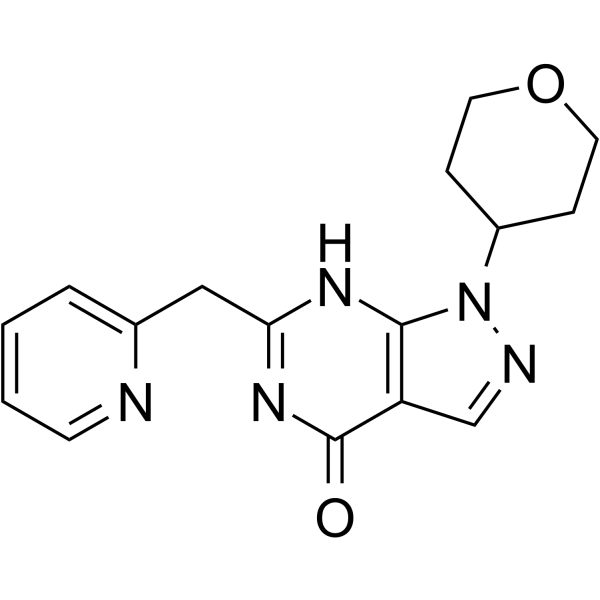 0 ImagesSynonyms: BI-409306Osoresnontrine (BI-409306) is a potent and selective PDE9A inhibitor, with an IC50 of 52 nM, and shows weak activity against other PDEs, such as PDE1A (IC50, 1.4 µM), PDE1C (IC50, 1.0 µM), PDE2A, PDE3A, PDE4B, PDE5A, PDE6AB, PDE7A, and PDE10A (IC50 all > 10 μM); Osoresnontrine can be used in the research of memory enhancement in CNS disorders.
-
PDE9-IN-1
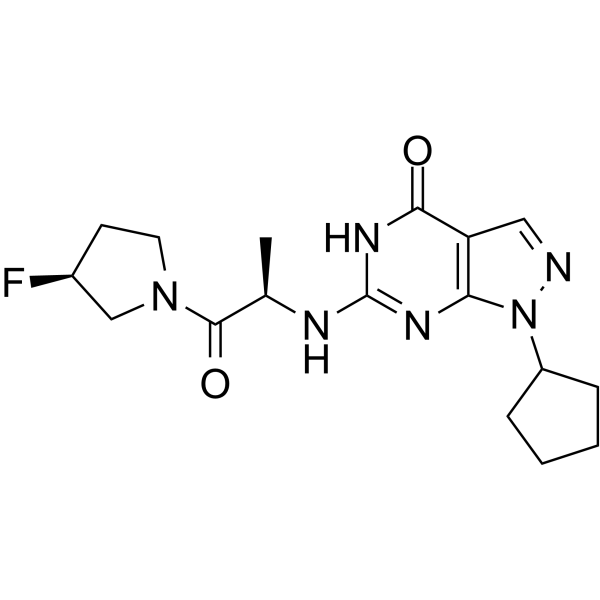 0 ImagesPDE9-IN-1 is a potent, selective, and orally bioavailable phosphodiesterase-9A (PDE9A) Inhibitor with an IC50 of 8.7 nM.
-
BAY-7081
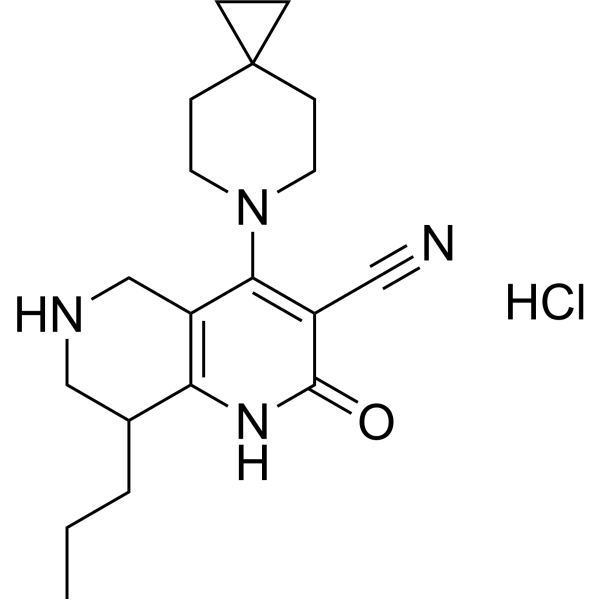 0 ImagesBAY-7081, a chemical probe, is a potent, selective, orally active and soluble cyanopyridone-based PDE9A inhibitor with an IC50 of 15 nM.
-
Tovinontrine
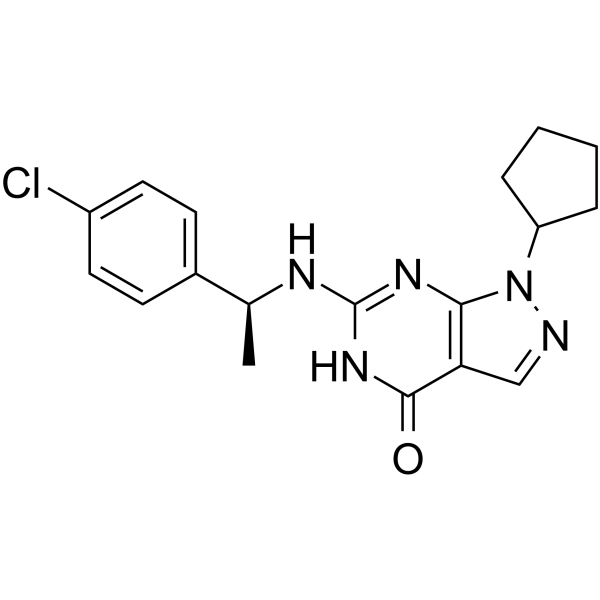
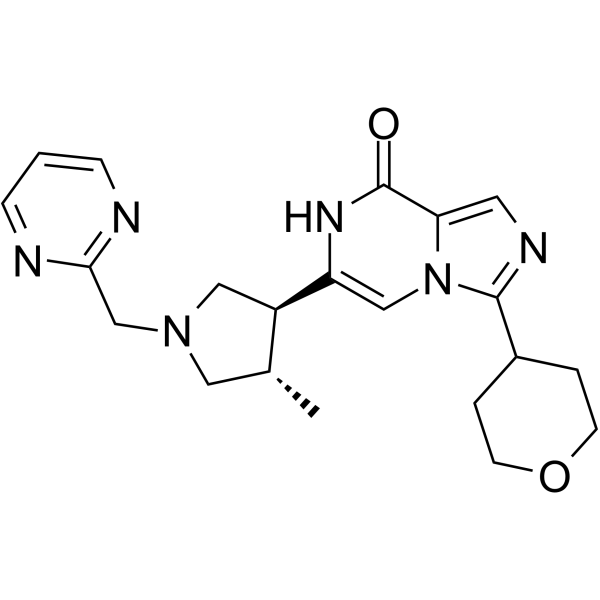 0 ImagesSynonyms: IMR-687Tovinontrine (IMR-687) is a highly potent and selective phosphodiesterase-9 (PDE9) inhibitor specifically for the treatment of sickle cell disease. IC50s are 8.19 nM and 9.99 nM for PDE9A1 and PDE9A2, respectively.
-
PDE-9 inhibitor
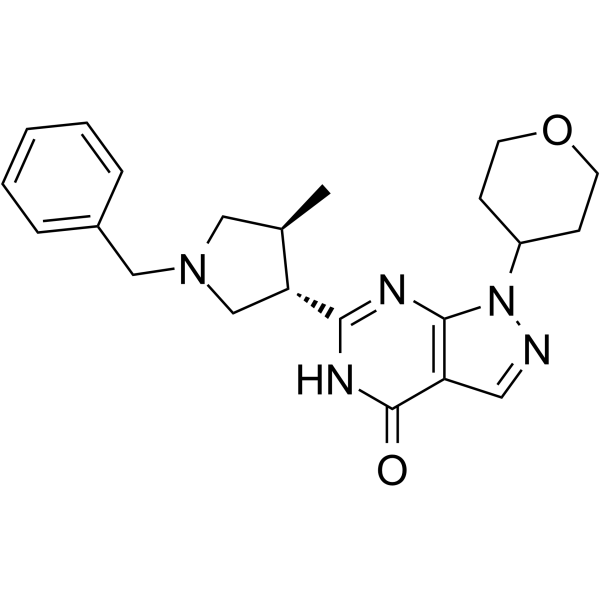 0 ImagesPDE-9 inhibitor is a potent PDE-9 inhibitor. PDE-9 inhibitor can be used for neurodegenerative diseases, such as Alzheimer's disease and schizophrenia.
-
PF-04822163
 0 ImagesCat. No.: HY-120741CAS No.: 1798334-07-2PF-04822163 is an orally active, selective, and blood-brain barrier permeable PDE1 inhibitor with IC50 values of 2 nM, 2.4 nM, and 7 nM for PDE1A, PDE1B, and PDE1C respectively. PF-04822163 can be used in the research of attention deficit hyperactivity disorder or Parkinson's disease.
-
Menabitan dihydrochloride
 0 ImagesCat. No.: HY-160991ACAS No.: 58019-50-4Synonyms: SP-204 dihydrochloride
-
PDE5-IN-13
 0 ImagesCat. No.: HY-170435PDE5-IN-13 (Compound 14b) inhibits phosphodiesterase 5 (PDE5A) with an IC50 of 3 nM. PDE5-IN-13 is a potential candidate for PAH (pulmonary arterial hypertension) research. PDE5-IN-13 has high selectivity for targets over PDE1, PDE2, PDE3, PDE4, PDE7, PDE8, PDE9, PDE10, and PDE11. PDE5-IN-13 is orally active.
-
Menabitan
 0 ImagesCat. No.: HY-160991CAS No.: 83784-21-8Synonyms: SP-204Menabitan (SP-204) is an inhibitor for phosphodiesterase 9 (PDE 9), which acts as a non-opioid analgesic agent. Menabitan lowers the intraocular pressure in rabbit model.
-
(R)-Irsenontrine
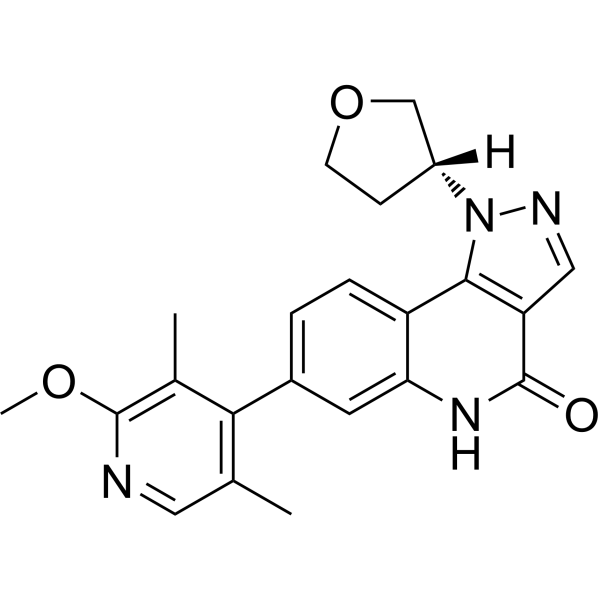 0 ImagesSynonyms: (R)-E2027(R)-Irsenontrine ((R)-E2027), the R-enantiomer of Irsenontrine (HY-132821), is a potent phosphodiesterase 9 (PDE9) inhibitor with an IC50 value of 0.041 μM. (R)-Irsenontrine can be used for the research of neurological diseases.
-
LH17
 0 ImagesCat. No.: HY-180803LH17, a Kaempferol (HY-14590) derivative, is a potent and selective PDE4 inhibitor (PDE4D2 IC50 = 73 nM, PDE4B2 IC50 = 190 nM). LH17 exhibits remarkable selectivity (>136-fold) against other PDE isoforms (PDE1B/2A/3A/5A/8A/9A/10A) (IC50 > 10000 nM), with the exception of PDE7A1 (IC50 = 300 nM). LH17 distinctly interacts with PDE4 M-pocket. LH17 demonstrates remarkable anti-fibrotic efficacy in both in vitro and in vivo models. LH17 can be used for idiopathic pulmonary fibrosis (IPF) research.
-
PDE4D inhibitor 1
 0 ImagesCat. No.: HY-173290PDE4-IN-1 is a PDE4 inhibitor with high potency (IC50 : 8.6 nM) and selectivity over other PDE subtypes. PDE4-IN-1 inhibits the release of inflammatory cytokines and chemokines. PDE4-IN-1 greatly restores impaired cAMP-CREB signaling pathway. PDE4-IN-1 inhibits proliferation and promotes differentiation to reverse the formation of psoriasis.
-
PDE1-IN-4
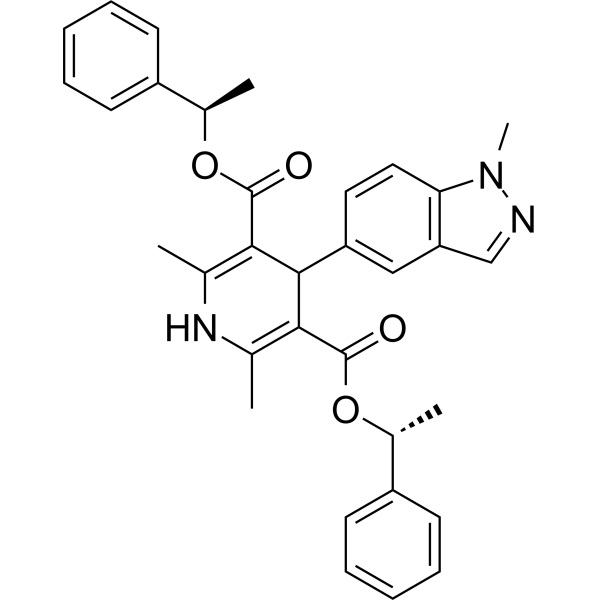 0 ImagesCat. No.: HY-147946CAS No.: 3031349-98-8PDE1-IN-4 (compound 2g) is a potent and selective PDE1 (phosphodiesterase-1) inhibitor, with IC50 values of 10, 145, and 354 nM for PDE1C, PDE1A, and PDE1B, respectively. PDE1-IN-4 inhibits myofibroblast differentiation of human lung fibroblasts induced by TGF-β1. PDE1-IN-4 shows anti-fibrosis effects through the regulation of cAMP (3′,5′-cyclic adenosine monophosphate) and cGMP (3′,5′-cyclic guanosine monophosphate). PDE1-IN-4 can be used for idiopathic pulmonary fibrosis (IPF) research.

- 1



